
Behavior Tracking and Mood
Connecting mood with experience


Sometimes we feel stress as wave after wave of anxiety or uncertainty. Anger can also crop up. At these times it can be difficult to figure out what is causing the stress. So, what can we do to get a better picture of where the stresses are coming from?
Behavior tracking
Looking at behaviors is a good way to isolate how moods shift and what kinds of shifts create stress.
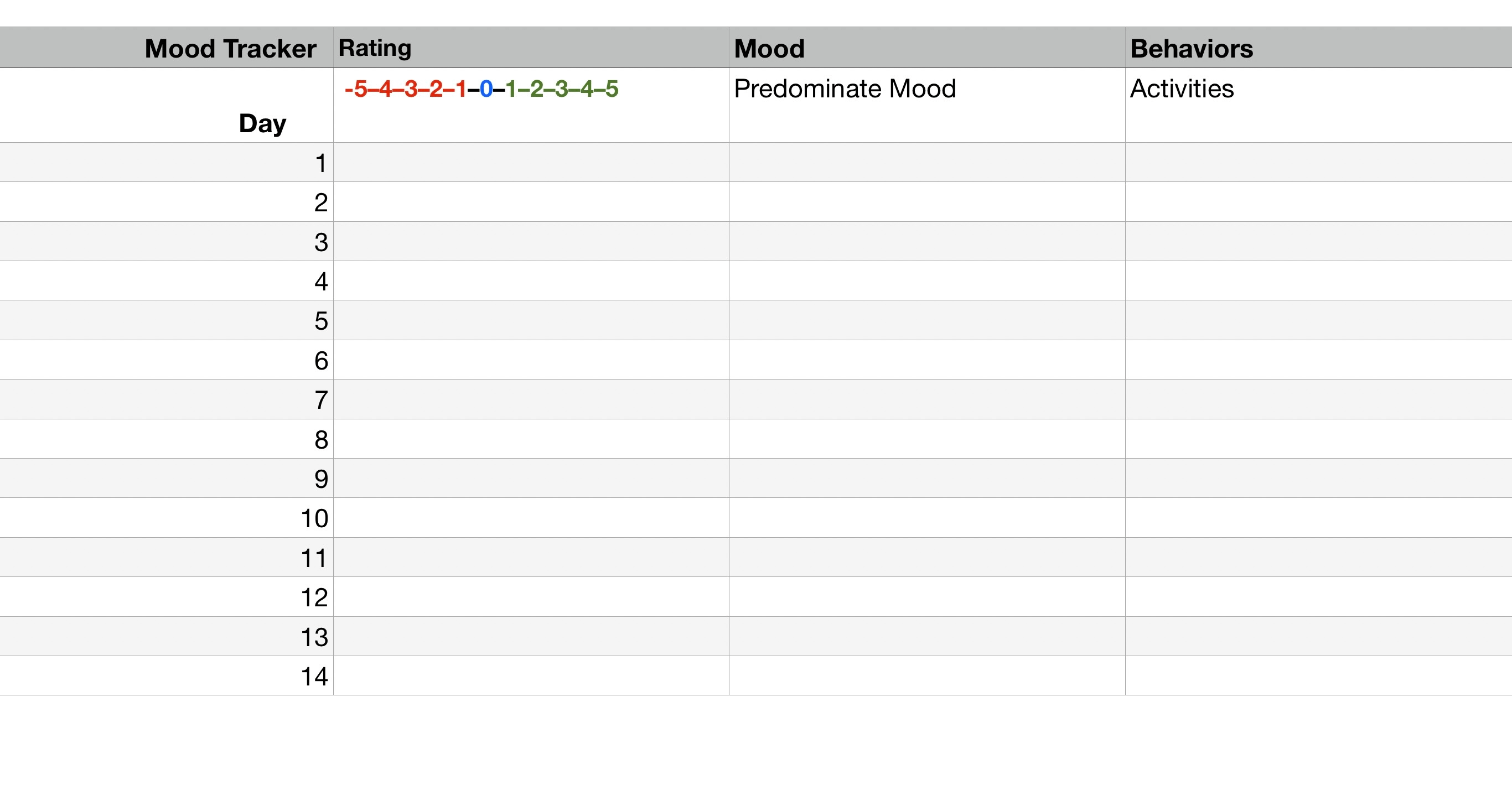
Creating a mood tracker can be as simple as sketching a grid in a notebook or adding an app to your phone. There are many apps out there, but I tend to be an old school pencil and paper type so I prefer the notebook version. I also believe that the act of writing out this information is helpful in and of itself.
Rate your mood on a scale of -5 up to +5. The scale is a bit arbitrary and you could use a 10 point scale or a 3 point one if you wish. The idea is simply to collect data on yourself.
How?
At any time during the day jot down your mood rating. -5 is at the negative end and +5 is at the positive end. Trust your gut and simply rate it based on how you have been feeling. Just give it a number.
Next move on to the predominate mood you are feeling. Remember there is no right or wrong way to feel. Just write what feeling comes up as you reflect.
Finally write a sentence about what is happening, the activity that you are engaged in (lunch break, meeting at work, argument with spouse, etc). No need to get fancy, just state in a sentence what is happening.
So what is the point?
When we start to observe ourselves in this way we are able to create a picture of the kinds of events that tend to influence our moods for better and worse. I refer to this as—the map of where we are currently. And if our goal is to get somewhere different—e.g. somewhere less stressful—knowing where we are currently becomes crucial. Creating a picture of the rise and fall of our mood states is illuminating because we tend to notice stress in our body late in the process. Often we ignore early signs of stress (tight muscles, queasiness)and our body continues to ramp signs up until we notice the physical/mental symptoms (pounding headache, difficulties thinking). Improving observation often leads to identifying stressors earlier. As humans we also tend to overlook when things are going well and when things are frustrating we can assume “this always happens to me.”
How long?
The amount of time you choose to collect data is up to you. I recommend starting with 14 days, but going beyond that is often helpful. It’s a simple process that once set up takes only a few minutes a day and can help you look at seasonal changes as well as those in the day to day. So tracking long term can also be helpful. Long term tracking can help confirm or dispel things you believe about yourself. For example in talking to a person who had tracked for several years they were able to notice that the belief they had —“I will always be stressed out and depressed.”— Was actually found to be false when reviewing previous records and comparing to current ones. Things had improved!
Why is this important?
When we notice earlier in the process we can intervene before stress bubbles over. As our observation improves it is possible to change course—BEFORE the STRESSFUL EVENT takes place. Collecting some data on ourselves allows us to better predict stress and work to circumvent it.
While not all stressors are predictable, many day to day stressors can be identified and changes made to decrease and/or eliminate their impact.
As in the example above this person had been actively doing things to decrease their stress levels as a part of their daily routine which resulted in less stress overall. This simple shift created a space for improved self care which also impacted stress levels in positive direction. When we start to add in activities that reliably bring us joy or allow us to step away from the day to day stresses we are inoculating ourselves for future stresses. What do I mean by this? Starting to reliably add in these stress relieving activities we can start to think about stresses differently. Rather than stress being something that just happens and has no solution, we start to realize we have options. And often those options are easily attainable. It could be as simple as taking a quick walk around the block or taking a coffee break. It’s up to you and what your current environment can support.
Then What?
Once we are collecting data in this way we can connect activities with stressors and start to look our thinking processes. That will be for future discussions. For the time being simply collect what is happening and what your predominate mood is—positive and negative—and put a number on that the stress levels. You may surprise yourself. I have given this exercise a number of times and heard “things aren’t as bad as I thought.”
Give it a try and tell me what you think.